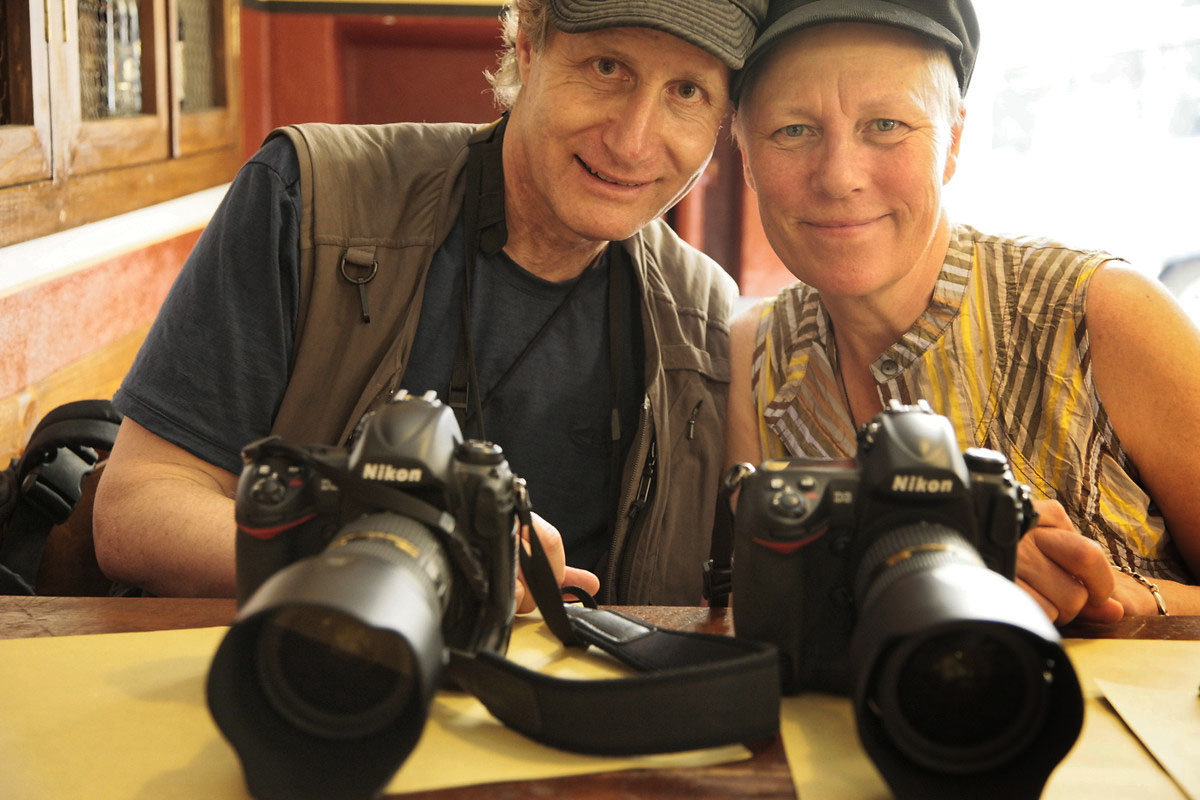
American photographer and filmmaker Cotton Coulson, 60, formerly of National Geographic and U.S. News & World Report magazines, died last night in Tromsø, Norway, after a scuba diving incident on Sunday that left him unconscious and in a coma.
By Donald R. Winslow (original post is here)
TROMSØ, NORWAY (May 28, 2015) – American photographer and filmmaker Cotton Coulson, 60, formerly of National Geographic and U.S. News & World Report magazines, died last night in Tromsø, Norway, after a scuba diving incident on Sunday that left him unconscious and in a coma.
According to Coulson’s son Calder, who is a sous chef in San Francisco, the photographer was on a scuba dive Sunday in cold waters north of Norway’s coast “when something went wrong.”
“He signaled to his diving partner, who dragged him up to the surface and administered CPR on him for about 20 minutes,” Coulson’s son told News Photographer magazine. He was then taken to hospital in Tromsø where he never regained consciousness, and then he died last night.
The dive took place during a 17-day National Geographic expedition to Norway’s Fjords and Arctic Svalbard on one of the dedicated small cruise ships that Geographic and Lindblad Expeditions use to sell high-end adventure packages and photography journeys. Coulson was one of the expedition’s team members, something he and his wife, National Geographic photojournalist Sisse Brimberg, have done many times before.
According to reports the incident happened while diving off the northern Norway coast. Rescue workers were able to get Coulson’s heart started again, and then he was transported by helicopter to the University of Northern Norway hospital in Tromsø. After their son Calder arrived from the States on Wednesday to be at his father’s bedside, and after doctors determined the photographer’s chances of recovery and his medical condition, Coulson died Wednesday night surrounded by his family.
Coulson is survived by Brimberg and their adult children, daughter Saskia and son Calder; a sister, Frances; and his mother, Mary Evangelista, who lives in New York.
 Brimberg and Coulson have been frequent contributors to National Geographic Traveler magazine in recent years from their home base in Copenhagen, Denmark, shooting stories together across Europe as a team. Collectively they have produced photographs for more than 60 stories for National Geographic and National Geographic Traveler magazines.
Coulson and Brimberg met at a National Geographic photography seminar in 1976. They told mutual friend Evan Nisselson that after the seminar they bonded during a Nikon School workshop where they had both been assigned. Coulson was named after Cotton Mather, the 17th century Puritan minister from New England, and Brimberg was born Marie-Louis, “but the name never stuck,” she said, having always gone by the name and byline Sisse.
Married for more than 30 years, the couple moved from San Francisco to Paris, and then to Copenhagen (her hometown) after 10 years in the Bay Area to establish their own media company, Keenpress. Together at Keenpress they’ve been working on corporate, editorial, and personal projects using HD photographs and video to tell stories about environmental, lifestyle, and contemporary issues.
Back in Silicon Valley, Coulson had worked for several years as a senior vice president of creative services for CNET Networks. Before CNET, he was initially drawn to California from the nation’s capitol to be the managing editor for Rick Smolan’s “24 Hours In Cyberspace” project in the autumn of 1996.
In Washington, Coulson was the associate director of photography for U.S. News & World Report magazine before moving a few miles north to be the director of photography for the Baltimore Sun. Before these posts he was a contract photographer for National Geographic beginning in 1976, one year after he graduated from New York University Film School. By 1987 Coulson had published more than a dozen assignments for the Geographic, including stories about Ireland (which he called his most-inspiring career assignment), Berlin, and the Brendan Voyage.
Any funeral or memorial service plans will be announced at a later time.
Editor’s Note: Cotton Coulson was a good friend for many years. We worked together in Washington and enjoyed being members of the White House News Photographers Association. We watched this new thing called The Internet arrive and while I was at Reuters New Media, Cotton was at U.S. News & World Report, and we were both tasked with trying to figure out how to take photojournalism into the new online world. Cotton built the majority of the Beta prototype for U.S. News & World Report’s first Web site at his kitchen table over a weekend. Later I helped bring him out to California so we could both work for Rick Smolan, and then Cotton went on to San Francisco’s CNET Networks. During the dot.com heyday, he brought me in at CNET for a six-week consulting gig that turned into six years. Cotton’s love of photography – all kinds of photography – was pure, and it invigorated him and brought him great joy. Anyone who knows Cotton has heard these words many times, delivered with a smile before each new adventure: “Oh come on! Let’s go! It’ll be fun!” And sure enough, it always was.