So Long, Champ

There are as many Ali stories as there are people, especially photographers, who ever met him. I covered a couple of Ali fights from the nosebleed sections, but it was never so much the fight itself as the days leading up to the fight, that his spirit …

We’re Just Sayin

Forty years ago this week, I was the happy recipient of what I like to call “the magic phone call.”  It was an era where the publication of magazines was thriving, and part of what those magazines produced – let’s face it, it was like the loss leader at a big store – were the photographs which drew the eye, and interest, of a viewing public toward the page.  In the era of  “citizen journalists,” and countless iPhone users — all of whom think of themselves as photographers in this neo-visual age, it is hard to understand what the importance of a wonderfully fulsome system was.   It was one of those “Golden Age” periods of photojournalism, hallmarked by three forces:  Magazines with pages to fill,  Photo budgets which let editors keep photographers “in the field” pursuing new work, and above all, a desire for the magazine entity (in my case mainly TIME) to beat the tar ouf of the competition (mainly Newsweek)  every week.  This wonderful intersection of means, ends, and desire, created an ongoing and quite impressive pressure which not only hoped for, but demanded good work on an ongoing basis.  It didn’t always mean that the work ended up being properly displayed in the magazine, but now, decades later, one realizes that the real magic was that the work was created in the first place.  It was a formula which so many of my generation knew and appreciated, and which the current beginners in photojournalism will seldom know.  As we live in the age of ‘everyone is a photographer,’ it becomes harder and harder for those starting out to find the kind of funding which lets them pursue a story which is farther away than one’s own neighborhood.   (It is, nonethless,  an axiom of photojournalism that everyone lives within a block or two of a great story.  But doing those stories never seems to be as exotic and beguiling as something halfway around the world.) 

And so it was that one day in early March, 1976, I received one of those “magic phone calls.”  It came from John Durniak, the flamboyant and near-genius picture editor of Time.   In what was common for the 1970s, we had a very brief phone call, the gist of which was “we’re doing a story on this new kind of music called Reggae, and we want you to go to Jamaica and do some pictures.”   In what might have been considered a hand-shake deal, the assignment was made, though in fact in five decades, I can recall only one or two actual handshakes.  It was all based on your word.  The word of the editor, and the word of the photographer.   Within a few minutes I was dealing with the actual picture researcher who was working the story, who made sure I was hooked up with the reporter, David DeVoss, who was an old pal of mine from 5 years earlier in the Saigon bureau.  I booked a ticket to Ocho Rios, and drew a bunch of film (something like 40 Tri-x and 40 Kodachrome – you had to ask for 70 or 80 rolls for someone to even raise an eyebrow) and some old Graflex strobes. Cause you never know when you might need some light for a dingy lit stage.  Somehow, now,  I am free to admit that as I got on board the plane for Jamaica, I didn’t really have any idea who Burning Spear, Fabienne, and even Bob Marley were.  But that was what journalism was about:  Finding out about something, and sharing what you came to learn in pictures with your audience. 

Island Records, the young label whose clever owner Chris Blackwell had signed many of the big reggae groups, was helping move our trip along.  These days, I suspect, the whole thing would be paid for by the company (if the magazine would accept such gratuities) but we paid our own way, and let them do the magic of hooking us up with the talent once there.   Five years later, I would spend considerable time in Jamaica (15 weeks scattered over 3 years) but in 1976, inspite of a pretty good ear for language, I was challenged by the Jamaican patois.  Later, as I “got it” it became clear what a poetic and expressive version of English it truly was.    David and I spent several days meeting with musicians, (Burning Spear, Ras Michael & the Sons of Negus) and other Rasta musicians who were the core of reggae.  At the end of each meet up, some one would ask us, “when you gonna see Bob?” as if this were the one thing we couldn’t pass up if we hoped to really understand reggae.  On the fifth day we drove over the island to Kingston, then as now a scrappy, tough place, with wonderful people if you can only get to meet them.  We visited Randy’s Records, a hub of island music, wandered briefly through Trenchtown, and on the last day saw Bob.  What was perhaps the coolest  part of the afternoon we spent with Bob Marley was that aside from someone from Island getting us there (to make sure we made it to the right house…)  there were no publicists, no hangers on, no one to say “you can’t ask him that.”  We spent several hours in a sitting room with Bob, with DeVoss asking him about everything from the idea of justice, to ‘Gun Court’, and of course music.  As a photographer, you tend to tune the audio out during interviews, spending far more energy eyeballing the subject and trying to find a picture that might be lurking. (“That window is a little too back lit, but if i bother trying to move him around, that probably will mess up the mojo of the moment. How do I use that light… maybe it’s better over there…”)  You scramble, you hop around, you try not to be obvious, and you hope that it might be  a little better just over there.  In the end, we spent several hours with Bob, and he couldn’t have been any more welcoming.   We talked, we shot pictures, and just before we left, I asked him to run across the yard, in front of the garage, a dozen times, trying to shoot with an old 35mm camera I’d converted to a “Race-track Finish-Line” style of camera.  He was a great sport, though I think he must have wondered what the hell I was  doing.  A year later when I met him with the band in Paris, for the start of the Exodus Tour, he saw that streaky  picture, and I reminded him  “Remember when I had you run back and forth in front of the garage…”  and he broke into a big smile.   At that moment, I was in for the next four days on tour.  Spending those few days with a guy who I realized was so wise, was like a gift.  Like so many stories when you meet someone you don’t know, learn about something you were clueless of, it helps you to create something which your viewing public can see, and appreciate.    Forty years later, these pictures,  an ode to Tri-x, mean more to me than when I was the clueless, but lucky photographer, just looking to make a few good snaps. And a tip of the hat to Chris Murray of Govinda Gallery in Washington DC, who convinced me that you could to a photographic book with material shot in only a few days.  If it’s the right subject, and the right few days, it can definately work. 

Katrina, Ten Years On…

Ten years ago this week, I hopped a plane to Houston, rented a car, and headed north to the Louisiana line. Even though it was already 5 months since the calamity of Hurricanes Katrina and Rita, getting through the National Guard roadblocks took a bit…

A Face In the Crowd

Just about a year ago, we got a call at Contact Press Images from a caller in Illinois. He’d seen a picture online, and was trying to find out more about it, and get a copy of it. Per usual, the office quoted him a price, and almost as an afterthough…

A Playboy Bunny?

Fifty years ago (holy crap… please don’t quote me.. I mean… this is what I heard happened.. I wasn’t really there was I?) my brother Tom graduated from Williams College (Class of ’65)… I had just finished my freshman year at The Colorado College…

The Other September 11

Then there is the ‘other’ September 11 — the coup d’etat in Chile in 1973 when the Chilean military (backed in no small regard by Nixon & Kissinger) ousted President Salvador Allende. I was on the first plane out of NY headed south that night,…

Another Year

Birthdays are of course given to relative levels of celebration. Nothing is cooler than being 5 or 6.. being able to blow out the candles in one big breath, all your kindergarten pals gathered around for cake. Later, it starts to take on slightly…

Selma Redux

This weekend was the 50th anniversary of the civil rights  march across the Edmund Pettus bridge, where demonstrators walked from Selma to Montgomery in those days which seem so far away, yet so near. I was then 18, a freshman at Colorado College,…

That Painful World Press Photo Decision

The tumult surrounding the World Press Photo awards for the last couple of weeks has been quite earth-shaking.  An Italian photographer, who had been awarded for “Contemporary Issues” was, finally, disqualified for having mis-labelled where a picture was shot (not in the town of Charleroi which was listed on the entry but 30 miles away in Bruxelles.)  Many of my colleagues have put pen to paper to complain about not only the manner in which this was handled, but to discuss the very basics of how the photojournalism community should act and re-act.  For those of us who try and live by the dictum that “it has to happen on it’s own.. and not because we made it happen” – trying to settle the discussion of the winning entry was difficult. By his own admission, the photographer had arranged with his cousin to photograph said cousin having sex in a parked car.  This week, the phrase “and it wasn’t his cousin” has taken on a whole new meaning – that of real work, done in real situations, and not fabricated as something that “might have happened.”   We are in a tough place.  The credibility of the press generally, and photography in particular is under fire from many quarters.  We do need to try and stand for something.  I’m sure, at the same time, that everyone of us has from time to time skirted on the edge of what was right, and in hind sight, it might be obvious, but at the moment, that clarity is sometimes lacking.  We need to reaffirm what we think is allowed, and how pictures are not only taken, but handled in post, and continue to maintain a standard for our work, doing it ourselves, as surely no one else in society cares as we do.  At the same time I worry that there may be another precedent here of which we need to be extremely careful.  The Mayor of Charleroi wrote a long letter describing how the said photos maligned his city, and that the award should be rescinded as it didn’t tell the ‘truth’ about the town.  Few of us have done work which someone, whether a Mayor or Press officer, or Publicist, or Media Relations person hasn’t taken issue with.   In the end, the point of what we do very often is to say  exactly what these folks don’t want seen or shown.  Merely pissing off a public official in itself shouldn’t be enough to put a good story on the chopping block.  There was a time when many of us felt that annoying someone in power was a pretty good sign we’d done our job.  I hope that in going forward we can try to agree on some kind of standards…especially in post processing… which dont lead to witch hunts and torch bearing midnight raids.  Photography is too important to be left to those who haven’t lived in our world.  In a time when everyone with a phone is a photographer, there remains a clear need for a corps of professionals who make great pictures, tell important stories, and show life as it is to the rest of society.  At the moment it sounds as if WPP is interested in moving the discussion along, after this long painful chapter.  Kudos to Bruno Stevens​, Yunghi Kim​, and Kenneth Jarecke​ among others, who felt the need to speak out.  Having been on the jury three times, I can tell you that as a juror, you feel you will never get it right —  your try of course, but you know that someone will always disagree with your choices. So be it.  But going forward I hope that this difficult couple of weeks can serve as a time to really speak of the issues, and try to find some comity amongst editors, contest directors, and most of all, the photographers whose work is where it all comes from.

Trying out the Samsung NX1 Camera.. a new way to see

Trying out the new Samsung NX1 “mirrorless” reflex camera
 low light in a ships hold

 and I have always found photographing fishermen with a moustache is the best way to determine how sharp a lens really is

 I love the low light characteristics – especially in mixed “end of day” and artificial light
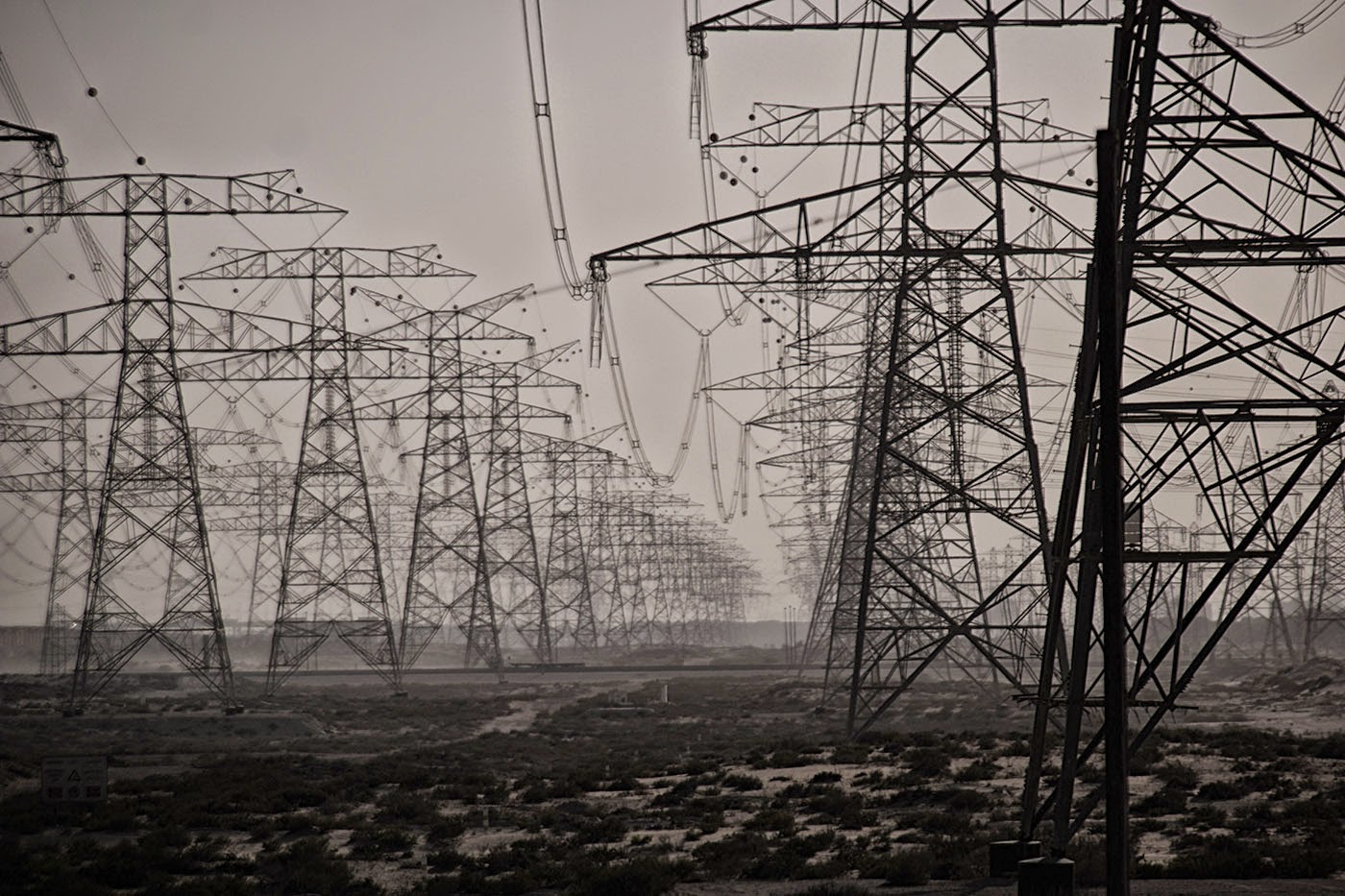
this is a series of pictures from Oman and Dubai, shot in late November with the NX1

I have been a photographer for a long time (does photographing President Kennedy count?) and throughout these several decades I have tried to match the gear I was using to the project I was working on.  For a long time, early on, I had but a single Pentax H3v, a sweet camera that had one of the best shutter noises of any camera I can remember.  Then I managed to get my first Nikon while in college, and expanded that through a series of Fs and Nikkormats, until my swap to Canon in 1978.  I feel like I have done a good deal of history with those Canon film cameras (AE-1, F1, EF, T90, Elan…. ah, the list goes on…) and eventually settled on the 5D, and 6D digital cameras.  When I was fit as a fiddle (there was about a two week period in 1982) I could carry all the stuff which we THOUGHT we needed to do the job.  Two zooms, short and long, a few primes, and usually three or four bodies.  The main thing about the extra bodies was having 3 or 4 rolls of film to shoot at a time.  Being artsy with  a solo Leica M4 and a 35mm lens was great, but if the fit hit the shan, you needed to have enough film to be able to get whatever the key sequences were.  That usually meant having several camera bodies loaded with what now seem like quaint little bitty rolls of 36 exposures.  It meant you could shoot a lot more before you had to stop and change film.

Gravity remains a force to be reckoned with, and no less so when you have to carry a whole suite of camera gear.  Eventually I was looking for something with great quality, and which wouldn’t turn my beaten up body into a mere shadow of my former self after schlepping them for a long day.  I always preferred the “smaller form” bodies anyway, since the big ‘professional’ cameras (D4, Eos 1Dx) were so heavy, that even though they would be great for shooting a sports sequence, they weren’t really designed to be carried in large numbers for a long day. 

The last few years has seen some amazing changes in camera design, in both standard mirror-ed digital gear, and the revolutionary mirrorless*  camera bodies (*that is aptly the new buzz word of this photographic decade.) I had a chance to get my hands on a pair of Samsung NX1 bodies, their two main pro zoom lenses, and a couple of primes, recently to try out this idea of shooting through the lens without a mirror.  In a word, it’s quite extraordinary: much smaller in size and weight, and yet amazingly crisp in the finder.  You’re no longer looking through the lens via a moving mirror. Now, the mini screen in the finder gives you that same “through the lens” view, but on a high rez screen in the eyepiece.  It takes a bit of getting used to, like all new techniques.  But with the extremely speedy auto focus that the camera employs, you very quickly understand that what you see in the finder is really what the camera is seeing.  The NX1 has a quick release (you know all those annoying delays on Point/Shoot cameras?… not here)  Look, there are a heck of a lot of great cameras out there. Not every camera is for every photographer.  It’s a personal choice, but the main thing is.. find something you like, that works for you, and spend enough time with it in hand that both you and the camera evolve into one.  The NX1 has a lot going for it.  A super crisp 28 megapixel chip which gives you astonishing files.  You can blow them way, way up, and they hold together beautifully.   I was a guy who always shot the slowest films available (Velvia, Kodachrome) and I tend to try and shoot with low ISO’s on my digital cameras, but its nice knowing you have the horsepower to go high.  It’s tough to tell a picture shot at 3200 from one shot at 400.  If you need the speed, it’s there.   One other thing which is, for me, a key feature.  In High-speed mode, the camera will shoot 15 frames per second. 

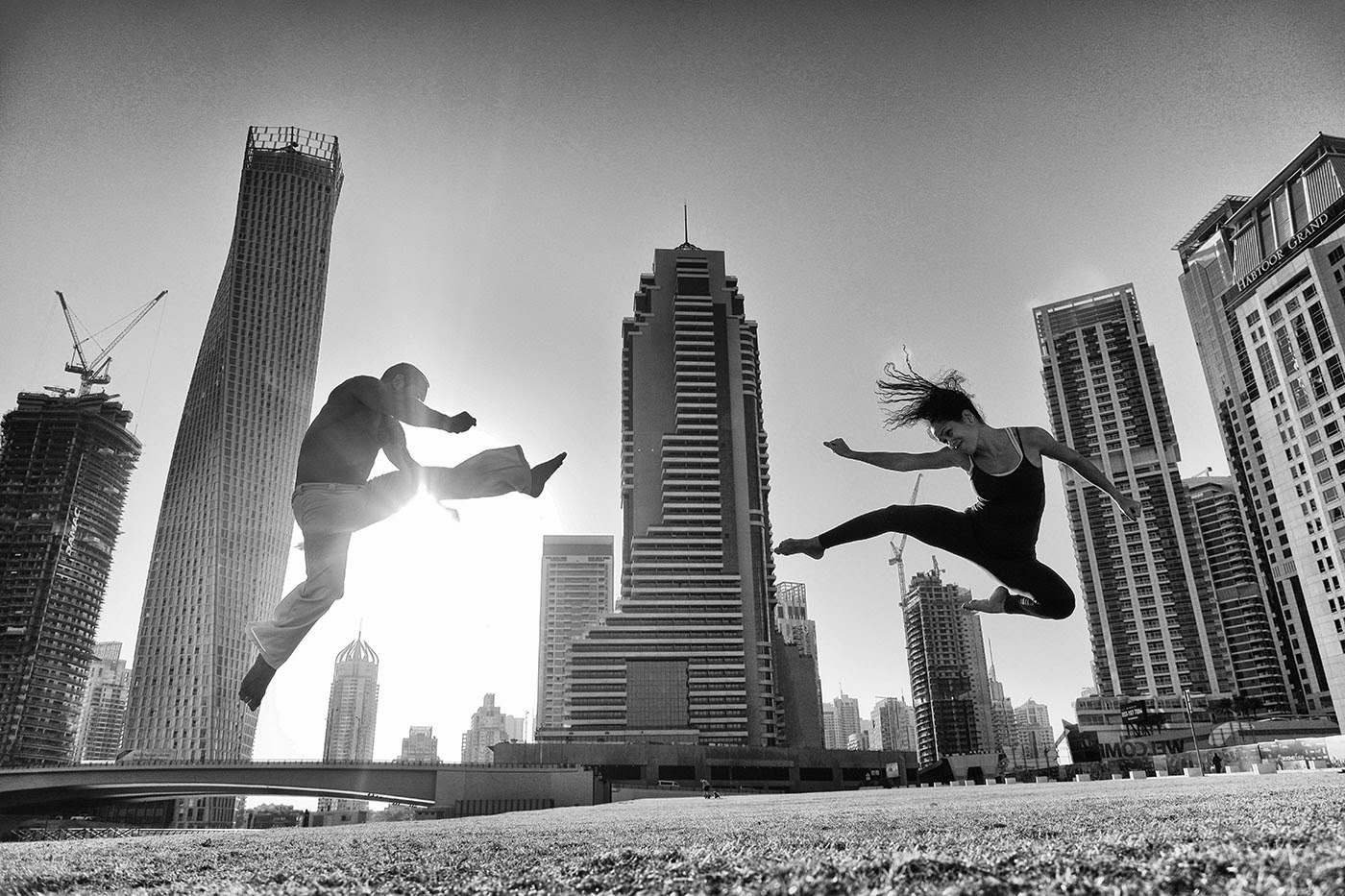
 It was a mix of capoeira and ballet, with a side of gymnastics thrown in – at 15 fps

For a lot of seconds.  As someone who has chased Olympic athletes for thirty years, I can tell you that while you don’t always need a high speed camera (there are definately times when you go for ONE frame!) when you do need it, there is no substitute.  I shot recently with some athletes in Dubai and Oman, and the amazing thing when editing the images is to see how (for once!) little changes between frames, and when you find the one you want, you have a seriously sharp file to work with. 


DB with the NX1 and my old Canon FD 135/2 (and yes, I did get a nap after I shot this!)

One last thing I love about the NX1: you can use your old glass, obviously in Manual Focus mode, on this camera.  I have a few old lenses (135/2 and 200/1.8) of Canon FD glass that I still love.  And with a small inexpensive adapter ring, I can use those lenses on the NX1.  With the ‘focus peaking’ feature, you can tell when a Manual lens is sharp, by the way the edges of the subject light up, letting you know it’s “in the zone.”  Going forward I’m looking at running my NX1 through the paces, but it feels rugged, it feels great in my hands, and at the end of the day I probably won’t need a trip to the chiropractor to put my shoulders back into place.  We’re just sayin’…. David

all photographs taken with Samsung NX1 with 18-200 zoom, 16-30 f/2 zoom, and 50-150/2.8 zoom